
The evidence diary: our starting point
Watch on YouTube ↗YouTube loads when you press play.
This is the opening record in the IndexHalo evidence diary, documented on 20 October 2026. It preserves a genuine saved answer sample and defines a practical next investigation. The purpose is to give a future review a clear starting point: the same question, the original evidence and a record of what happened between observations.
Entry 01: the buyer question and its scope
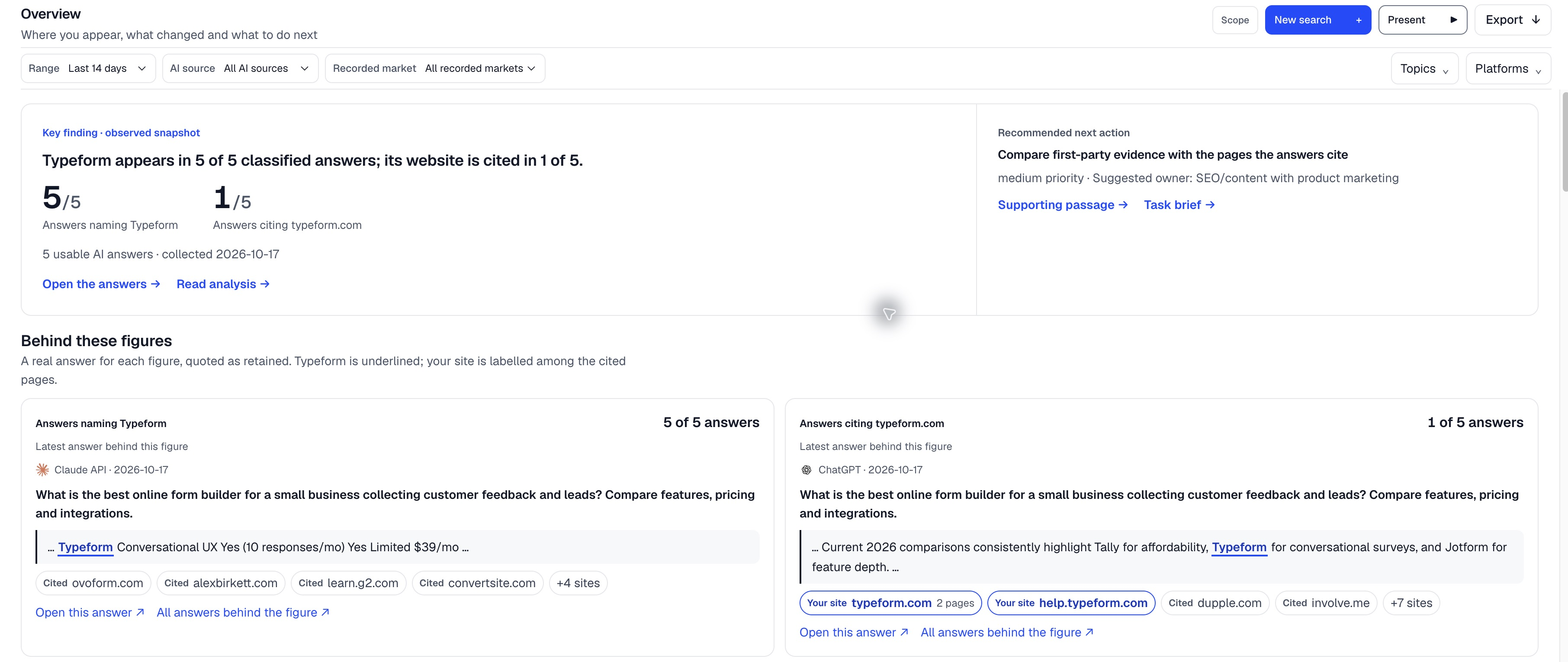
The public example concerns Typeform. The exact saved question is: “What is the best online form builder for a small business collecting customer feedback and leads? Compare features, pricing and integrations.” The recorded market is the United States, the language is English and the device is desktop.
Five usable answers were collected on 17 October 2026. The dashboard and report library were inspected for this diary on 20 October 2026. The collection date belongs to the answers; the diary date belongs to this review. Preserving both makes the record easier to interpret later.
The opening observation
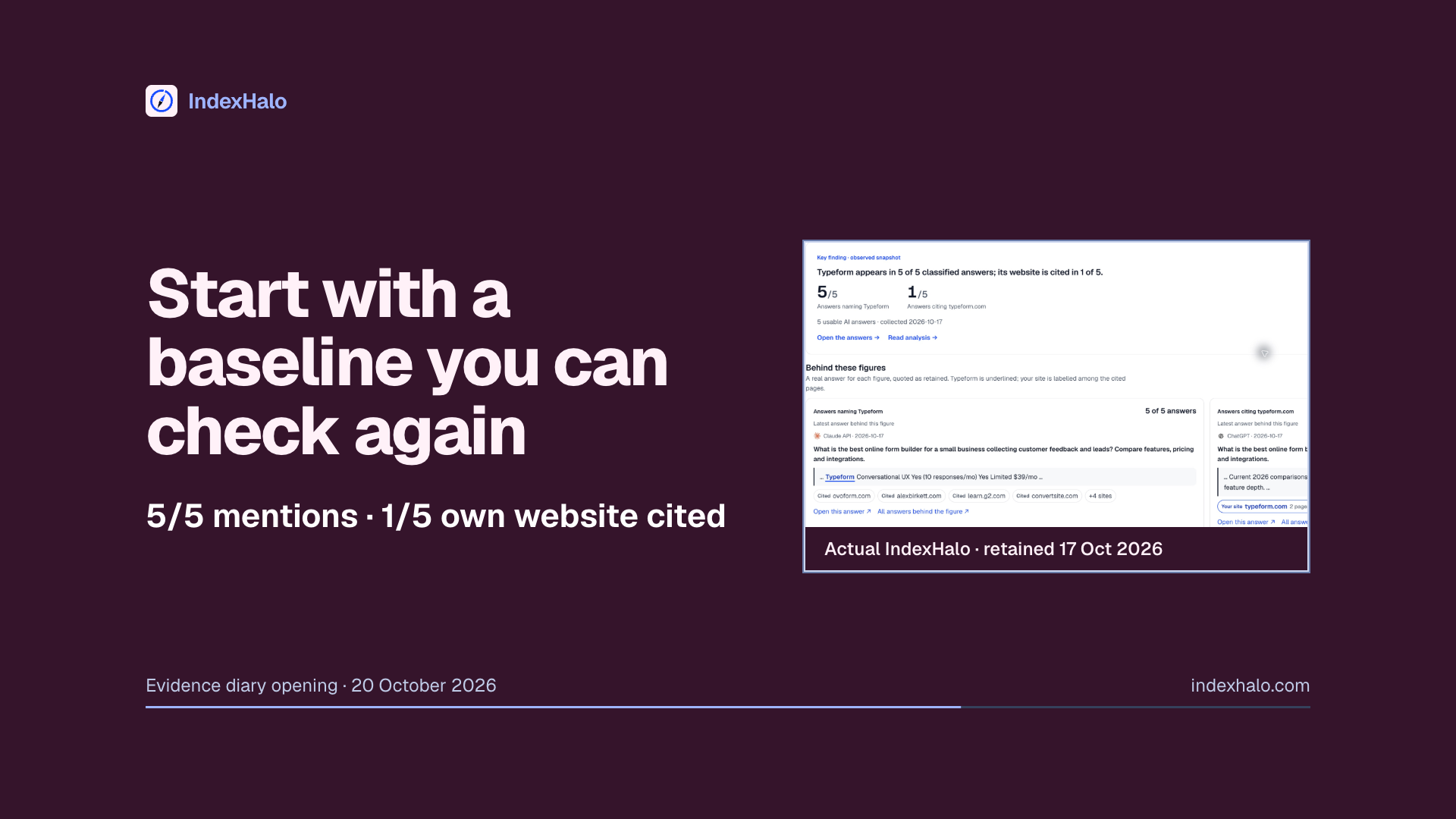
Typeform appears in all five usable answers. Its own website is cited in one of those five. These two counts are the starting observations for this buyer question. They describe brand presence and first-party source presence within the retained answer set.
The source view contains 41 distinct cited pages. Sixteen are listicles, eight are comparison pages and six are pricing pages. This page landscape adds context to the source investigation. Page counts and answer counts remain separate in the diary because they describe different units.
The investigation we propose next
The next useful investigation is to compare first-party evidence with the pages cited in the answers. The citation-gap view identifies involve.me in three answers that do not cite Typeform's website. Those three answers provide a manageable starting queue for a page-by-page review.
For each important claim, the reviewer should keep the exact wording, cited URL, relevant supporting passage and review date. The working record should state whether the claim is supported, outdated or unresolved. It should also identify the first-party page that contains the relevant information or the precise information gap that needs attention.
This is the proposed next stage of the diary. The baseline entry establishes the observed evidence and the review question. A completed source review would be recorded in its own entry.
What would make a page recommendation useful?
A proposed edit should follow from a documented finding about the content. It might clarify a product condition, explain a relevant integration workflow or provide a better route to supporting documentation. The reviewer should identify the destination page and section and the approved wording needed for the change.
An evidence-backed decision to keep the page as it is can also complete a review. The value of the process is a justified decision about the work. For a change that is approved and published, the diary should retain the public URL, a summary of the edit and its publication date.
What the next comparable observation should contain
A future answer check should preserve the original buyer question, market, language and source scope. It should record the collection date, usable-answer count, brand-mention count, first-party-citation count and the retained answers behind those figures.
The review should also inspect which pages were cited and how the answers described the buyer's requirements. A changed count is easier to explain when the original and later answer evidence are available side by side. If the scope changes, that new research should be identified separately in the diary.
Any later observation will need to be interpreted alongside the work record and the broader context. A page edit and a later answer change can be documented together; establishing why an answer changed requires additional evidence.
Use the same record for your own monthly routine
Start with a buyer question that matters to your team. Save the scope and record a finding with its collection date and denominator. Attach the answers that support it, then name the investigation that could change your next decision.
Use a simple entry structure: question and scope; observed finding; supporting answers and pages; proposed or completed work; next comparable check. Keeping the structure consistent makes it easier for a colleague or client to follow the decisions across reporting periods.
A free IndexHalo report gives you a starting result to inspect. When you are ready to maintain the routine, choose the monthly search allowance for your core questions and repeat checks. Every subscription includes the full feature set.
Public brand example · one buyer question · collected 17 October 2026 · current interface captured 20 October 2026. This opening diary records a baseline and a proposed source review. It does not record a completed Typeform page change, a new follow-up search or a measured improvement.
Start your free report, then plan a monthly search routine that fits your team. Every tier includes the full feature set; monthly credits reset without rollover.
