
Plan a useful first month with IndexHalo
Watch on YouTube ↗YouTube loads when you press play.
Make room for the questions that matter.
Estimate one complete month. Each question, market/language combination and run uses one search; selected available sources are included.
100complete searches
1 × 10 × 2 × 4 = 80 recurring searches, plus 20 extra.
Professional · $49 USD/month
100 monthly searches; 0 left after this plan. Plus applicable tax.
Review plans and checkout terms →Every tier includes the full feature set. One credit equals one complete search. Monthly credits reset without rollover. Saved reports remain available to read and export.
Planning estimate. Monthly allowance resets each billing period.
A monthly AI visibility subscription is most useful when it supports a repeatable set of decisions. Before choosing an allowance, decide which buyer questions your team needs to investigate, how widely you need to test them and how often a fresh answer would change your work. That gives you a concrete search budget and a useful first-month routine.
Start with the decision behind each question
Write a short list of decisions you expect to make this month. A SaaS team might choose which comparison page to improve, which integration explanation to expand or which use case deserves a dedicated page. An agency might need an evidence-backed recommendation for each active client. Give each decision a buyer question and an intended reader.
Prefer questions with a recognisable buying context. “Which form builder supports lead qualification for a small B2B team?” creates a more useful content investigation than a broad request for popular software. Record the relevant market, language and source selection with the question. This becomes the scope you can return to later.
Count complete searches
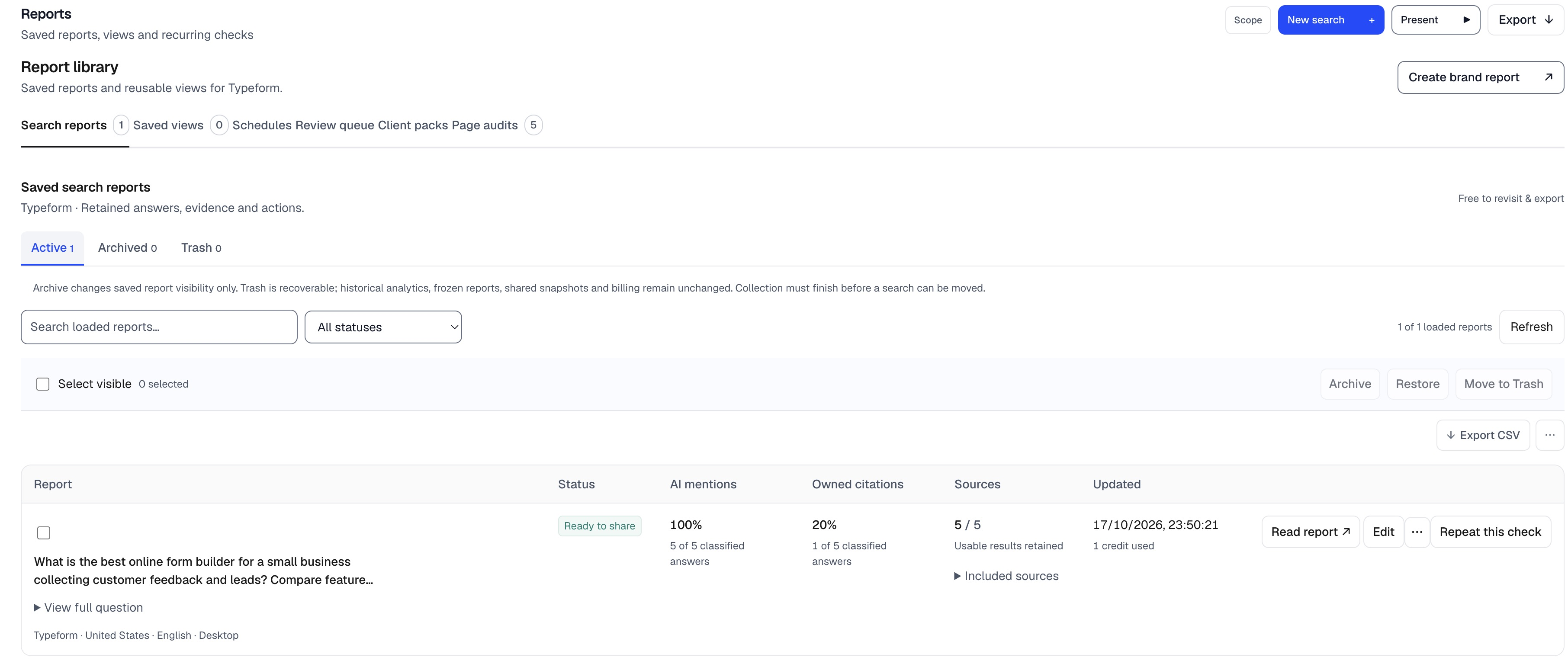
One credit includes one complete search: one buyer question, one market and language, and one run across your selected available sources, with its complete saved report. Several answers inside that result remain part of the same complete search. Reading and exporting saved reports does not consume another credit.
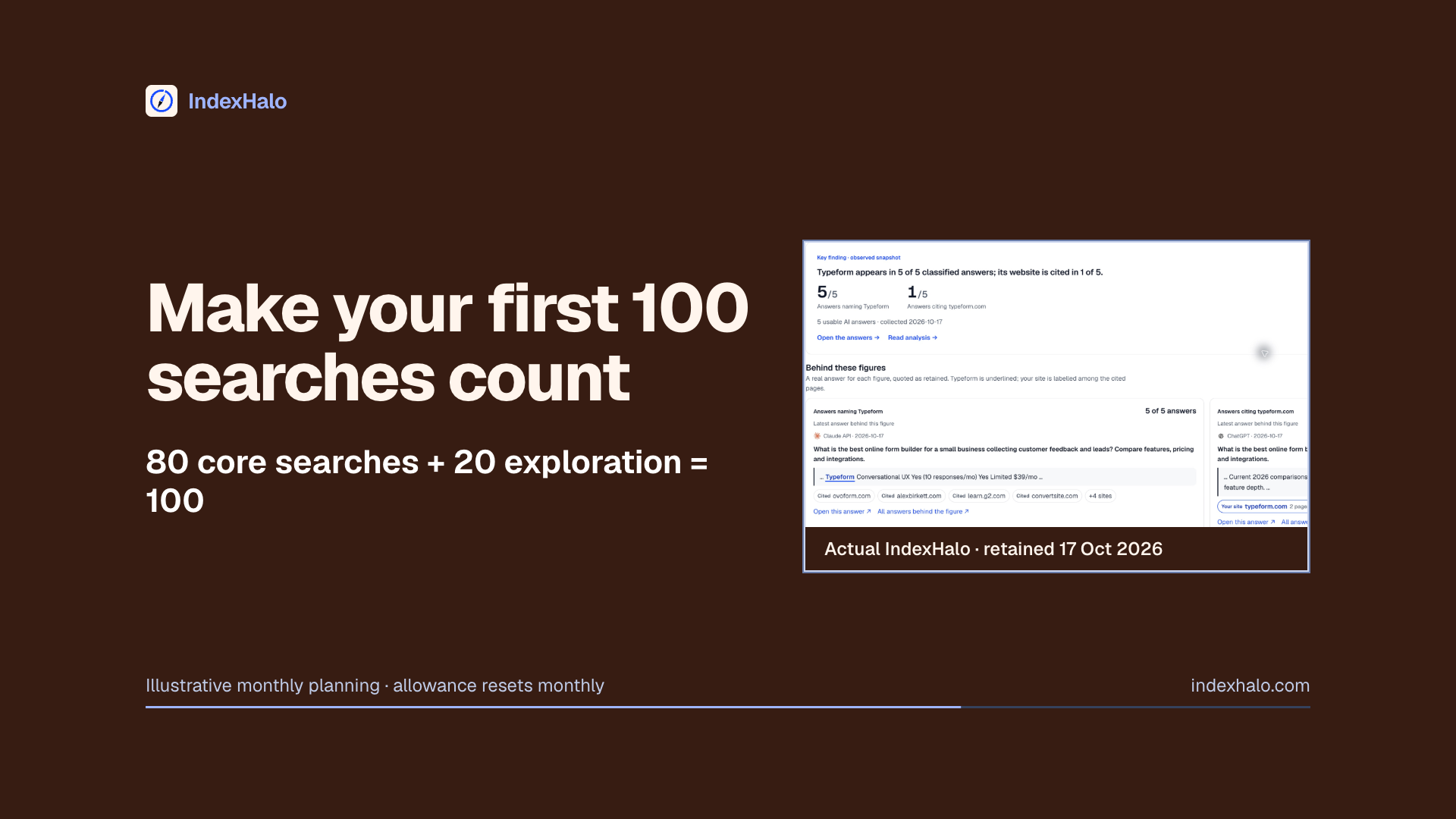
The planning formula is buyer questions × market/language combinations × runs, plus any additional exploration. Twelve questions across two combinations, repeated four times, require 96 complete searches. Ten questions across two combinations, repeated four times, require 80. Adding 20 exploratory searches brings the second plan to 100.
These are planning examples. Replace the inputs with the work your team will actually do. For an agency, calculate each client's workload first, then add the totals. This makes it easier to explain why a particular allowance suits the portfolio.
Give the month a stable core and an exploration reserve
The stable core is the set you intend to repeat. Keep the question wording and collection scope consistent so the later answer set has a useful reference point. An exploration reserve supports questions that arise during the month, such as a new competitor, a frequently raised sales objection or an unfamiliar cited source.
Choose the split deliberately. If your team is establishing its position, a larger core may be useful. If you are investigating a new category or use case, allow more room for discovery. Review the split after the first month using the searches that led to actual decisions.
Use week one to establish the baseline
Run the core questions and inspect the retained answers. Compare whether the brand is named with whether its own website is cited. Follow the relevant answers into their sources and keep the date and usable-answer counts with your notes. End the week with a small number of useful investigations.
For each investigation, state the question you want the page review to answer. For example: does our integration page explain the buyer's workflow as directly as the pages cited in this result? This makes the next task more specific than a general instruction to create more content.
Turn weeks two and three into useful work
Give each proposed change a target page, an owner and an acceptance check. The acceptance check should describe something a reviewer can verify, such as an accurate integration example, a clearly stated requirement or a working link to supporting documentation. Record when an approved change becomes public.
Run the stable core on the dates in your plan, and spend the exploration reserve where a new question could affect the next decision. Keep an unchanged core question separate from a newly worded question so your review can distinguish continuity from new research.
Use week four to choose the next month
Bring together the original finding, completed work, repeat observations and next recommendation. The report should help its reader decide what to continue, revise or investigate next. Where the team has analytics evidence, review that on its own dates and units alongside the answer evidence.
Every IndexHalo subscription includes the same full feature set; only the monthly credit allowance changes. The allowance resets each paid billing period without rollover. Plan your repeat checks and monthly review within that period. Reading and exporting the saved reports remains available without consuming another search credit.
The public pricing page checked on 20 October 2026 lists Professional at $49 USD per month for 100 searches, Business at $129 for 300 and Agency at $299 for 750, plus applicable tax. Use your planned workload to choose the allowance, then review the final amount at checkout.
Start with a free report using a question that matters to your business. Once you have seen how the evidence informs a decision, use the planner to choose a monthly allowance for the routine you want to maintain.
The monthly workloads and weekly routine are illustrative planning recommendations. Subscription terms should be read alongside the current pricing page.
Start your free report, then plan a monthly search routine that fits your team. Every tier includes the full feature set; monthly credits reset without rollover.